To de-risk your planning permit, the work starts well before the decision notice arrives. For property developers in Victoria, obtaining a planning permit is often seen as the ultimate “green light.” However, seasoned investors and town planners know that the permit is only as valuable as the project’s ability to be built within its conditions. As we navigate the complex regulatory environment of 2026, one of the most significant risks to project ROI is the disconnect between the planning vision and the construction reality.
To effectively de-risk planning permit Victoria applications, developers are increasingly turning to a collaborative model that brings builder expertise into the room long before the first shovel hits the ground. Specifically, when navigating Section 173 agreements and complex permit conditions, having a builder’s perspective can mean the difference between a high-yield development and a project stalled by unworkable requirements.
What is a Section 173 Agreement and Why Does it Matter?
A Section 173 agreement is a legal contract between a council and a landowner, enabled by the Planning and Environment Act 1987. These agreements are often used to enforce conditions that “run with the land,” such as infrastructure contributions, specific landscaping obligations, or restrictions on how the site can be developed in the future.
The risk arises when these agreements—or general permit conditions—contain “buildability traps.” These are requirements that look good on a planning diagram but are physically impossible, prohibitively expensive, or non-compliant with the National Construction Code (NCC) once the detailed design begins.
The “Buildability Gap”: Common Planning Permit Pitfalls
When a project is designed in a vacuum without town planning builder input, several risks often emerge that make it harder to de-risk your planning permit during the transition from permit to construction.
- Overly Prescriptive Materiality
Council planners may insist on specific external finishes or cladding types to satisfy heritage or aesthetic guidelines. Without builder input, a developer might agree to a material that is currently suffering from 2026 supply chain volatility or one that no longer meets updated fire-safety compliance standards. - Unrealistic Infrastructure Requirements
Section 173 agreements often include obligations for the developer to provide “works-in-kind” or specific infrastructure upgrades. A builder can provide a high-level cost-benefit analysis of these requirements during the planning stage, allowing the developer to negotiate more realistic terms with the council before the agreement is signed. - Construction Access and Site Constraints
Planning permits often mandate the retention of certain trees or the preservation of specific site features. While noble from a planning perspective, these conditions can sometimes make it impossible to get heavy machinery onto the site or move materials safely. Identifying these “access traps” early allows for the permit conditions to be modified to allow for practical construction staging.
How Builder Input (ECI) De-Risks the Process
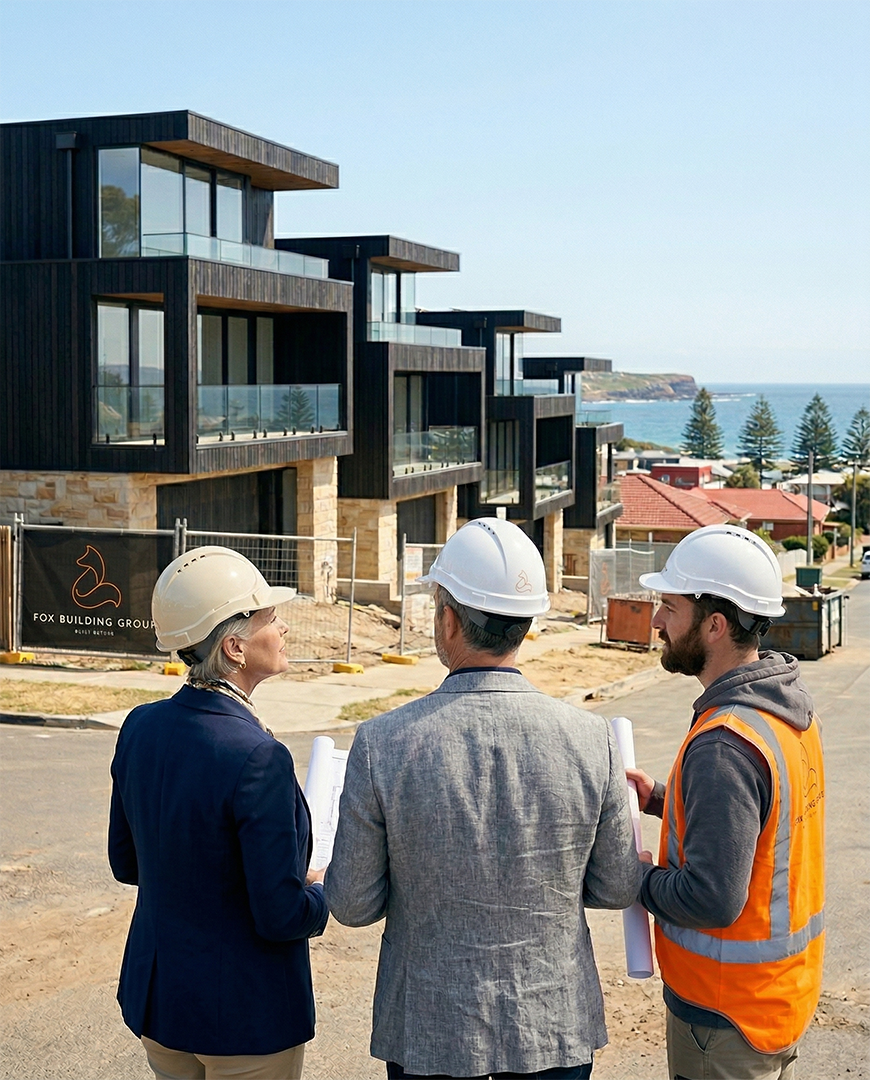
At Fox Building Group, we advocate for Early Contractor Involvement (ECI) as a primary tool for de-risking the planning phase. By engaging a builder as a “Consultative Partner” during the permit application process, developers gain a technical advocate who can speak to the “how” of the project.
Validating Cost Estimates for Contributions
Many Section 173 agreements involve financial or physical infrastructure contributions. We provide “open-book” costing to validate these requirements against current market prices for trades and materials. This ensures that the developer isn’t agreeing to a financial burden that will cripple the project’s feasibility 18 months down the line.
Ensuring Alignment with the BPC and NCC
With the Building and Plumbing Commission (BPC) now overseeing compliance in Victoria, the gap between “Planning approval” and “Building compliance” has narrowed. A builder ensures that any design changes demanded by the council won’t lead to a failure in obtaining a building permit later. This is particularly vital for multi-residential projects where 2026 fire separation and energy efficiency (NatHERS) standards are non-negotiable.
De-Risk Your Planning Permit by Strengthening VCAT and Council Negotiations
When a planning application is challenged—whether at a council meeting or a VCAT hearing—having a builder’s report on the “practicality of conditions” provides a powerful layer of evidence. It demonstrates that the developer is committed to a high-quality, deliverable outcome, rather than just a theoretical design.
Case Study: A Unified Approach in Geelong
Fox Building Group’s unified architect-builder methodology is specifically designed to bridge this gap. In our recent boutique commercial and high-end residential projects across Geelong, our input during the pre-construction phase has allowed developers to:
- Refine building footprints to avoid expensive and unnecessary Section 173 tree protection zones.
- Negotiate material substitutions that met council aesthetic requirements while staying within the commercial cost plan.
- Identify drainage and infrastructure hurdles that would have required a “Section 72” amendment if found after the permit was issued.
By integrating these performance goals from the first design sketch, we ensure that the vision for an elegant, compliant project is actually achievable within the market realities of 2026.
Conclusion: Planning for Certainty
The era of “get the permit now, figure out the build later” is over. In a market where margins are tight and regulatory oversight is at an all-time high, the way to de-risk your planning permit is to treat it as a collaborative document, not a formality.
By seeking town planning builder input early, you aren’t just checking a box; you are protecting your ROI, ensuring your project is buildable, and de-risking your planning permit Victoria journey.
Don’t let a permit condition stall your progress. Contact Fox Building Group for a preliminary buildability review and de-risk your planning permit Victoria project today.
Let's speak about your project
Even a five-minute chat can give you fresh direction.